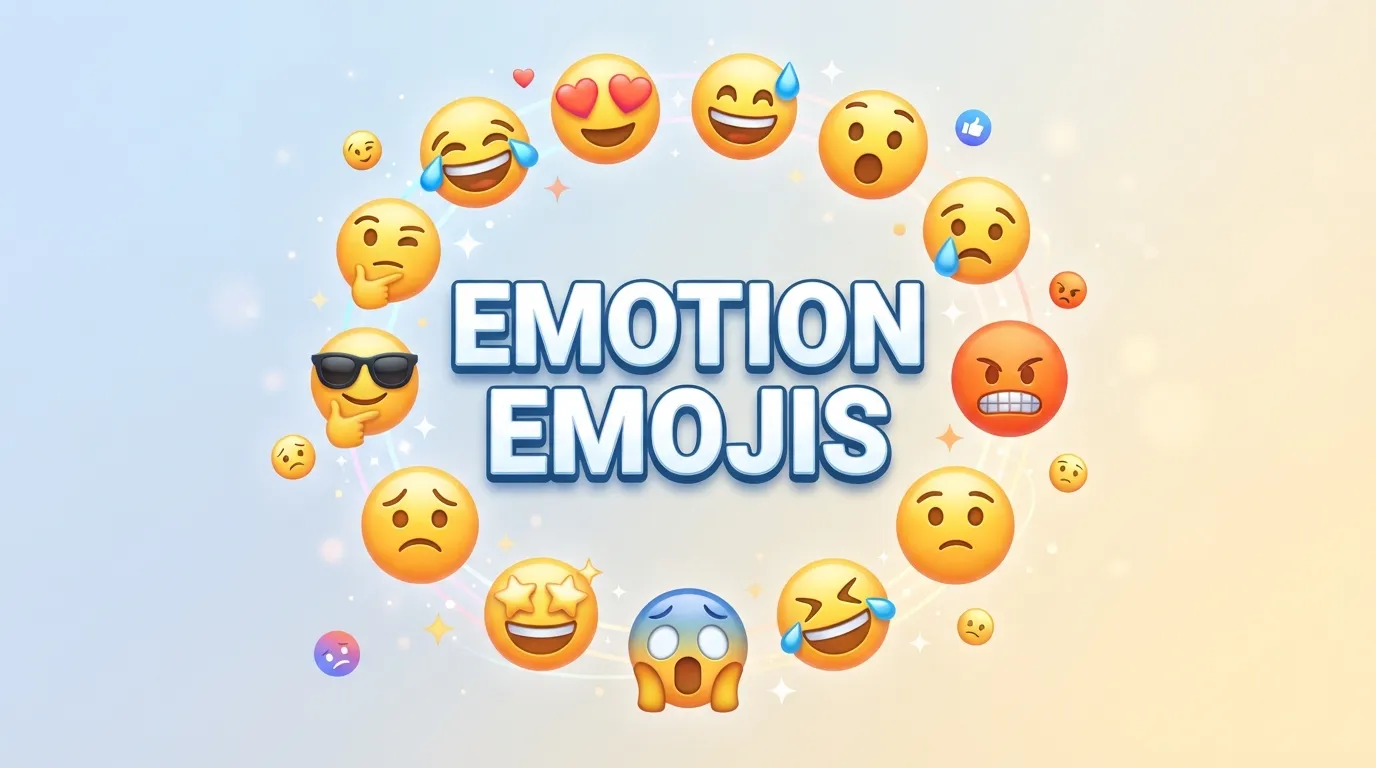
Emojis make digital conversations easier because they add emotion to words. Emotion emojis can show happiness, sadness, love, anger, fear, surprise, confusion, embarrassment, excitement, and many other feelings.
From a simple 😊 to a crying 😂 or heart ❤️, the right emoji can quickly communicate how you feel without writing a long explanation.
This guide explains the most useful emotion emojis, their meanings, examples, and common mistakes so you can choose the right one confidently.
Quick Answer: What Are Emotion Emojis?
Emotion emojis are symbols used in text messages, social media posts, comments, emails, and online conversations to express feelings or reactions. Common examples include 😊 for happiness, 😢 for sadness, 😡 for anger, 😍 for love or admiration, 😱 for shock or fear, and 😂 for strong amusement.
The meaning of an emoji can change depending on the conversation, relationship, platform, and context. For example, 😭 can represent sadness, but many people also use it online to show that something is extremely funny or emotionally overwhelming.
What Do Emotion Emojis Mean?
Emotion emojis are primarily visual expressions. They help readers understand the emotional tone behind a written message.
Consider the difference:
- “That was amazing.”
- “That was amazing! 😍”
- “That was amazing! 😭”
- “That was amazing! 😂”
The words are similar, but each emoji changes the feeling of the message.
Emojis can communicate:
- Happiness
- Love
- Excitement
- Sadness
- Anger
- Fear
- Surprise
- Confusion
- Embarrassment
- Disappointment
- Relief
- Gratitude
- Nervousness
- Amusement
- Affection
They are especially useful because written messages do not include facial expressions, gestures, or tone of voice.
100+ Emotion Emojis and Their Meanings
Here is a practical reference for common emojis used to express emotions.
| Emoji | Common meaning | Example |
| 😀 | Happy | “Good morning! 😀” |
| 😃 | Very happy | “I got the job! 😃” |
| 😄 | Cheerful | “That sounds great! 😄” |
| 😁 | Big smile | “I finally finished it! 😁” |
| 😆 | Laughing | “That joke was hilarious! 😆” |
| 😅 | Nervous laughter or relief | “I almost forgot! 😅” |
| 😂 | Laughing hard | “That was so funny! 😂” |
| 🤣 | Extremely funny | “I can’t stop laughing! 🤣” |
| 😊 | Warm happiness | “Thank you so much 😊” |
| 🙂 | Gentle happiness | “Sure, no problem 🙂” |
| 🙃 | Irony or awkwardness | “Everything went perfectly… 🙃” |
| 😉 | Wink or playful tone | “You know what I mean 😉” |
| 😌 | Calm or content | “Finally, some peace 😌” |
| 😍 | Love or admiration | “This view is beautiful 😍” |
| 🥰 | Affection or being loved | “You’re so sweet 🥰” |
| 😘 | Affectionate kiss | “Good night 😘” |
| 😗 | Kissing | “Thanks 😗” |
| 😋 | Enjoyment | “This cake is delicious 😋” |
| 😛 | Playfulness | “Just kidding 😛” |
| 🤪 | Silly or confused fun | “What a confused day! 🤪” |
| 🤩 | Amazement or excitement | “That concert was incredible! 🤩” |
| 🥳 | Celebration | “Happy birthday! 🥳” |
| 😎 | Confidence or coolness | “Ready for the weekend 😎” |
| 🤗 | Hug or warmth | “Sending you a hug 🤗” |
| 🫶 | Love or support | “Thanks for always supporting me 🫶” |
| ❤️ | Love | “I love you ❤️” |
| 🩷 | Affection or gentle love | “So happy for you 🩷” |
| 🧡 | Care or warmth | “Take care 🧡” |
| 💛 | Friendship or happiness | “You made my day 💛” |
| 💚 | Care or support | “I’m here for you 💚” |
| 💙 | Trust or affection | “Thank you, friend 💙” |
| 💜 | Affection or admiration | “You did amazing 💜” |
| 🤍 | Peace or pure affection | “Sending love 🤍” |
| 🖤 | Deep emotion or dark humor | “That song hits hard 🖤” |
| 💔 | Heartbreak | “I miss you 💔” |
| ❤️🩹 | Emotional healing | “Getting better every day ❤️🩹” |
| ❤️🔥 | Intense love or passion | “This song is fire ❤️🔥” |
| 😢 | Sadness | “I miss home 😢” |
| 😭 | Crying or overwhelming emotion | “I can’t believe it 😭” |
| ☹️ | Unhappiness | “That’s disappointing ☹️” |
| 🙁 | Sad or concerned | “I hope you’re okay 🙁” |
| 😞 | Disappointment | “I didn’t get selected 😞” |
| 😔 | Sadness or regret | “I should have called 😔” |
| 😟 | Worry | “I’m worried about tomorrow 😟” |
| 😕 | Confusion or uncertainty | “What happened? 😕” |
| 🙁 | Concern | “Are you feeling okay? 🙁” |
| 😣 | Struggle or frustration | “This is difficult 😣” |
| 😖 | Distress | “I can’t solve this 😖” |
| 😫 | Exhaustion | “I’m so tired 😫” |
| 😩 | Frustration or exhaustion | “What a long day 😩” |
| 🥺 | Pleading or emotional appeal | “Please stay 🥺” |
| 🥹 | Deep emotion or tears of joy | “I’m so proud of you 🥹” |
| 😤 | Frustration or determination | “I’ll prove them wrong 😤” |
| 😠 | Anger | “That’s not fair 😠” |
| 😡 | Strong anger | “I’m really angry 😡” |
| 🤬 | Extreme anger | “I’m furious 🤬” |
| 😶 | Speechlessness | “I don’t know what to say 😶” |
| 😐 | Neutral feeling | “Okay 😐” |
| 😑 | Unimpressed | “Really? 😑” |
| 🙄 | Annoyance or disbelief | “Here we go again 🙄” |
| 😏 | Smirk or confidence | “I knew it 😏” |
| 😒 | Annoyance | “That’s annoying 😒” |
| 🤔 | Thinking | “Let me think 🤔” |
| 🤨 | Doubt or suspicion | “Are you serious? 🤨” |
| 🧐 | Careful examination | “Interesting… 🧐” |
| 😳 | Embarrassment or shock | “You actually said that? 😳” |
| 🫣 | Shyness or hiding | “I can’t watch! 🫣” |
| 😬 | Nervousness | “This might be awkward 😬” |
| 🫠 | Overwhelmed or embarrassed | “I can’t deal with this 🫠” |
| 😮 | Surprise | “Wow! 😮” |
| 😲 | Strong surprise | “You won? 😲” |
| 😯 | Mild surprise | “Oh, really? 😯” |
| 😱 | Fear or shock | “That’s terrifying! 😱” |
| 😨 | Fear | “I’m scared 😨” |
| 😰 | Anxiety or nervousness | “I’m nervous about the test 😰” |
| 😥 | Sadness with relief | “At least you’re safe 😥” |
| 😓 | Stress | “I have so much work 😓” |
| 😮💨 | Relief or exhaustion | “It’s finally over 😮💨” |
| 😴 | Sleepiness | “I’m going to bed 😴” |
| 🤤 | Strong desire or delicious food | “That looks amazing 🤤” |
| 🤢 | Disgust or nausea | “That smells awful 🤢” |
| 🤮 | Strong disgust | “That’s disgusting 🤮” |
| 🤧 | Feeling sick | “I’m not feeling well 🤧” |
| 🥵 | Very hot or intense | “It’s so hot today 🥵” |
| 🥶 | Very cold or shocked | “It’s freezing! 🥶” |
| 😵 | Shock or confusion | “What just happened? 😵” |
| 🤯 | Mind blown | “I never expected that! 🤯” |
| 🥱 | Bored or tired | “This meeting is long 🥱” |
| 😇 | Innocence or goodness | “I didn’t do anything 😇” |
| 🤭 | Giggle or embarrassment | “Oops, I shouldn’t laugh 🤭” |
| 🤫 | Silence or secrecy | “Don’t tell anyone 🤫” |
| 🤥 | Lying or dishonesty | “That’s not true 🤥” |
| 😈 | Mischief | “I have a plan 😈” |
| 👿 | Anger or evil | “That’s unacceptable 👿” |
| 💀 | Extreme amusement or shock | “That was hilarious 💀” |
| 👻 | Playfulness or spooky mood | “Happy Halloween! 👻” |
| 💩 | Humor or something unpleasant | “What a mess 💩” |
| 🙏 | Gratitude, prayer, or request | “Thank you 🙏” |
| 👏 | Applause or praise | “Well done! 👏” |
| 🙌 | Celebration | “We did it! 🙌” |
| 💪 | Strength or determination | “Keep going 💪” |
| ✨ | Excitement or emphasis | “You did it! ✨” |
| 🔥 | Excitement or approval | “That outfit is 🔥” |
Best Emojis for Different Emotions
Sometimes you know the feeling but do not know which emoji fits it. These groups make the choice easier.
😊 Happy Emotion Emojis
Use these when you want to show happiness, friendliness, or positivity:
😀 😃 😄 😁 😆 😊 🙂 😌 🥳 🤩
Examples:
- “I passed my exam! 🥳”
- “Thanks for helping me 😊”
- “That is wonderful news! 🤩”
❤️ Love and Affection Emojis
For romantic love, friendship, appreciation, or emotional warmth:
❤️ 🩷 🧡 💛 💚 💙 💜 🤍 🥰 😍 😘 🫶
Examples:
- “Love you! ❤️”
- “You look amazing 😍”
- “Thanks for being there for me 🫶”
😢 Sad Emotion Emojis
For sadness, disappointment, missing someone, or emotional moments:
😢 😭 😞 😔 😥 ☹️ 🙁 🥺 🥹 💔
Examples:
- “I really miss you 😢”
- “That ending broke my heart 💔”
- “I’m so proud of you 🥹”
😡 Angry Emotion Emojis
For irritation, frustration, or serious anger:
😠 😡 🤬 😤 👿 🙄 😒
Examples:
- “That’s really unfair 😡”
- “I’ve had enough 😤”
- “Seriously? 🙄”
😱 Fear and Shock Emojis
These are useful when something is frightening, unexpected, or unbelievable:
😨 😰 😱 😲 😮 🤯 😳
Examples:
- “You scared me! 😱”
- “Wait, that’s actually true? 😲”
- “My mind is blown 🤯”
🤔 Confused and Thinking Emojis
Use these when you are uncertain, questioning something, or thinking deeply:
🤔 🤨 🧐 😕 😐 😶
Examples:
- “Are you sure? 🤨”
- “Let me check 🤔”
- “I don’t understand 😕”
How to Use Emotion Emojis in Text Messages
The best emoji usually supports the words rather than replacing them completely.
For example:
Friendly:
“Thanks for helping me 😊”
Excited:
“We finally finished the project! 🎉🙌”
Apologetic:
“I’m sorry I forgot 😔”
Playful:
“Okay, you got me 😂”
Supportive:
“I’m always here for you 🫶”
One or two well-chosen emojis can often make a message feel warmer and clearer.
Emotion Emojis vs. Reaction Emojis
These terms are sometimes used interchangeably, but there is a small difference.
Emotion emojis mainly communicate how someone feels:
- 😊 Happiness
- 😢 Sadness
- 😡 Anger
- 😰 Anxiety
- 😍 Love
Reaction emojis communicate a response to something:
- 👏 Approval
- 🙌 Celebration
- 🤯 Amazement
- 😂 Amusement
- 🤔 Questioning
- 💀 Extreme amusement or shock
Many emojis can serve both purposes depending on context.
Why Can the Same Emoji Have Different Meanings?
Emoji meanings are not always fixed. People use them creatively, and internet culture changes how certain emojis are understood.
For example, 😭 traditionally represents crying. In casual online conversations, however, someone might use it after a hilarious comment:
“That video was so funny 😭”
Here, the person may not actually be sad. The emoji can emphasize that the situation was overwhelmingly funny.
Similarly, 💀 can literally suggest death or something dark, but online it is often used to mean:
“I’m dead” from laughter.
Context is therefore extremely important.
Common Mistakes When Using Emotion Emojis
1. Using Too Many Emojis
A message containing ten or twenty emojis can become difficult to understand.
Instead of:
“Thank you 😊🥰❤️😍😘💕✨😭🙌👏”
Try:
“Thank you so much! 🥰❤️”
2. Assuming Everyone Uses Emojis the Same Way
Age, culture, personal habits, and online communities can influence emoji interpretation.
A symbol that seems funny to one person may feel sarcastic or inappropriate to another.
3. Using a Strong Emoji for a Mild Feeling
There is a difference between:
- 🙂 — mild positivity
- 😊 — warm happiness
- 😍 — strong admiration
- 🥰 — affectionate warmth
Choosing an overly intense emoji can accidentally change your message.
4. Ignoring the Context
The same emoji can mean different things in different conversations.
For example, 🙏 may communicate gratitude, a request, prayer, or appreciation depending on the message around it.
5. Using Emojis in Serious Professional Messages
Emojis can be useful at work when the culture is casual, but sensitive or formal messages require more care.
A simple “Thank you.” may be more appropriate than adding several playful emojis to a serious business communication.
Practical Tips for Choosing the Right Emotion Emoji
Use these simple rules:
- Think about your actual emotion first.
- Choose an emoji that matches the intensity.
- Consider who will receive the message.
- Read the complete message before sending it.
- Use context when an emoji has multiple meanings.
- Keep professional communication more restrained.
- Use emojis to add tone, not create confusion.
- When unsure, choose a simple and widely understood emoji.
Frequently Asked Questions
What are emotion emojis?
Emotion emojis are visual symbols used to communicate feelings such as happiness, sadness, love, anger, fear, surprise, confusion, and excitement in digital communication.
What is the best emoji for happiness?
😊 is a good general choice for warm happiness. 😀, 😄, 🥳, and 🤩 can express stronger excitement or joy depending on the situation.
What emoji means love?
❤️ is the most recognizable love emoji. 😍 and 🥰 can express admiration and affection, while 🫶 often communicates love, support, or appreciation.
What emoji means sadness?
😢 commonly represents sadness or tears. 😭 can represent intense sadness, but in online conversations it can also express overwhelming laughter or emotion.
What emoji means anger?
😠 and 😡 commonly represent anger. 🤬 indicates a much stronger level of anger, while 😤 can express frustration or determination.
What does 😂 mean?
😂 commonly means that something is very funny. It is often used when someone is laughing so hard that they are crying.
What does 🥺 mean in texting?
🥺 can express pleading, vulnerability, affection, shyness, or an emotional request. Its exact meaning depends on the surrounding conversation.
Can emojis have different meanings?
Yes. Emoji meanings can change according to context, culture, personal usage, and internet trends. Some emojis have developed popular meanings beyond their original visual expression.
Conclusion
Emotion emojis make digital communication more expressive by adding feelings that plain text can sometimes miss. If you want to show happiness with 😊, love with ❤️, sadness with 😢, excitement with 🥳, frustration with 😤, or surprise with 😲, choosing the right symbol can make your message clearer and more personal.
The key is to use emojis naturally and consider the context, audience, and strength of the emotion. You do not need many symbols to communicate effectively; one well-chosen emoji can completely change the tone of a message and help your words feel more human.

I am Josiah Michael, an animal enthusiast and writer who loves exploring wildlife, animal behavior, fascinating facts, and unique nicknames while sharing simple, enjoyable knowledge with readers.